Researches from INSIGHT Partners Tampere University (TAU) and NovaMechanics (NovaM) have co-authered a paper entitled ‘BMDx2: A Tool for Integrating Toxicogenomics-Based Dose-Dependency Analysis and AOP-Based Mechanistic Insights’.
This paper presents BMDx2, a tool designed to analyse how chemicals affect biological systems by examining changes in gene activity across different exposure levels. The tool brings together dose-response modelling and structured biological knowledge, known as Adverse Outcome Pathways, to help translate complex molecular data into explanations of how early molecular changes may lead to harmful health effects.
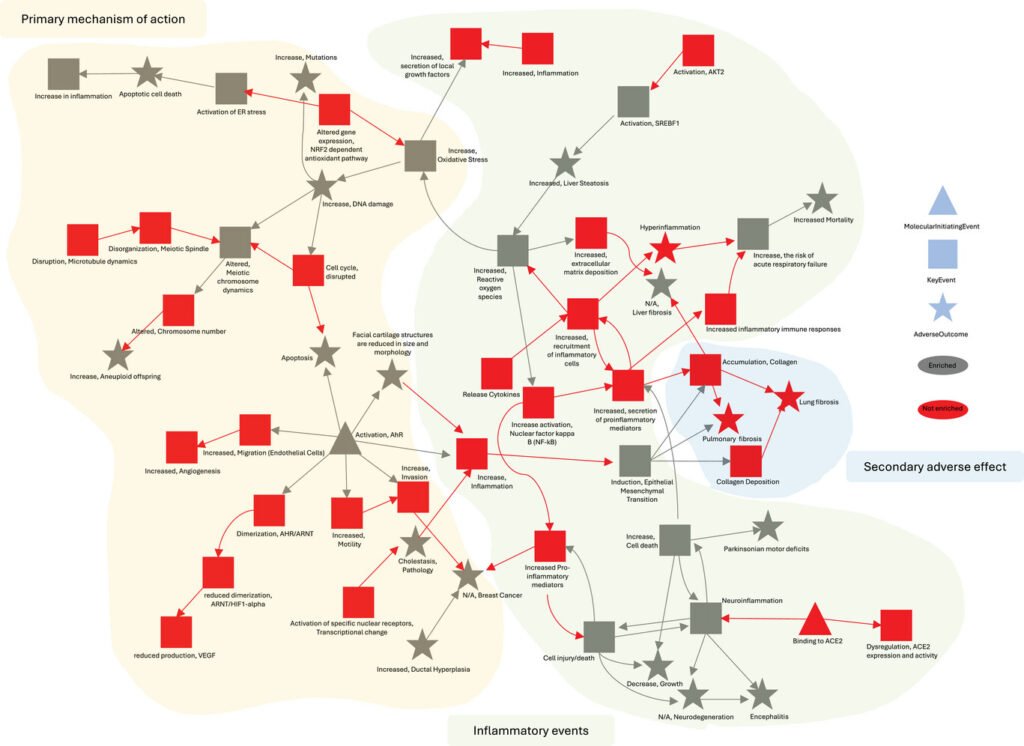
Current toxicogenomics methods often list altered genes without showing how these changes connect to real mechanistic outcomes, making the data difficult to use in regulatory decision‑making. BMDx2 addresses this gap by providing a transparent and standardized way to link gene‑level responses to higher‑level biological events, supporting a more mechanistic and interpretable form of chemical safety assessment.
The novelty of this tool lies in its unique ability to analyse dose‑dependent gene responses and connect them directly to the AOP framework within a single software environment. Unlike existing tools, BMDx2 not only identifies the dose at which genes begin to respond but also maps those genes onto biological pathways, key events, and larger networks of interconnected processes.
Findings
Using this tool, the authors found important insights in two case studies. In the first, they analysed combined gene expression and DNA methylation data from cells exposed to carbon nanotubes and discovered a sequence of events showing how early stress responses evolve into longer‑term changes linked to fibrosis. In the second case study, focused on the drug bleomycin, they showed how BMDx2 reconstructed the drug’s known ability to trigger DNA damage, inflammation, and ultimately lung fibrosis, using only transcriptomics data.
For the SSbD framework within INSIGHT, BMDx2 provides the type of mechanistic, quantitative evidence needed for early hazard identification. By mapping molecular responses to recognized health‑relevant pathways and regulatory hazard categories, the tool supports more informed and proactive decisions during chemical and material development, advancing next‑generation risk assessment.
To download the full paper, follow this link.