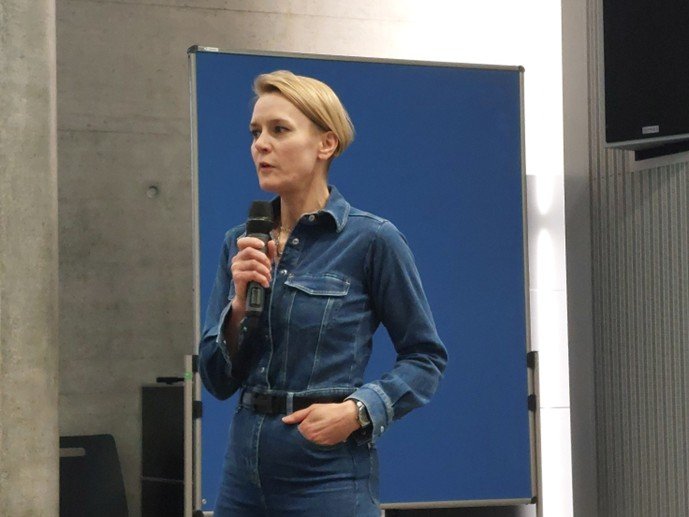
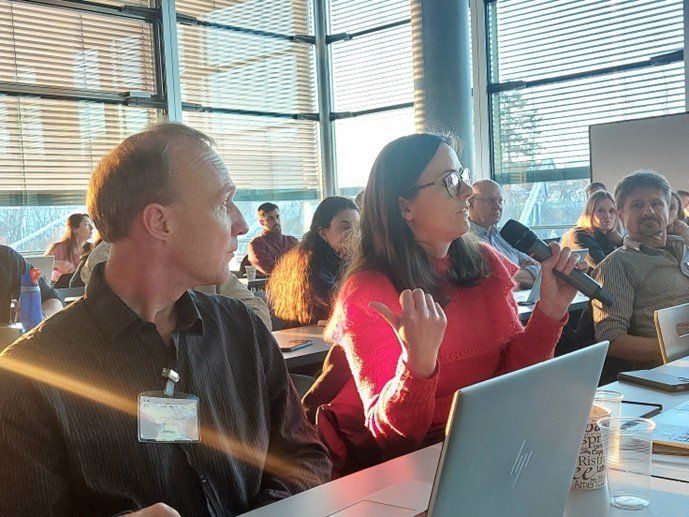
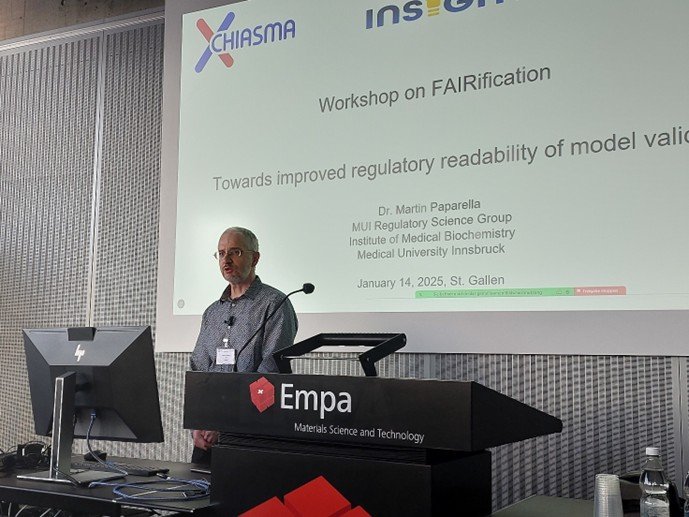
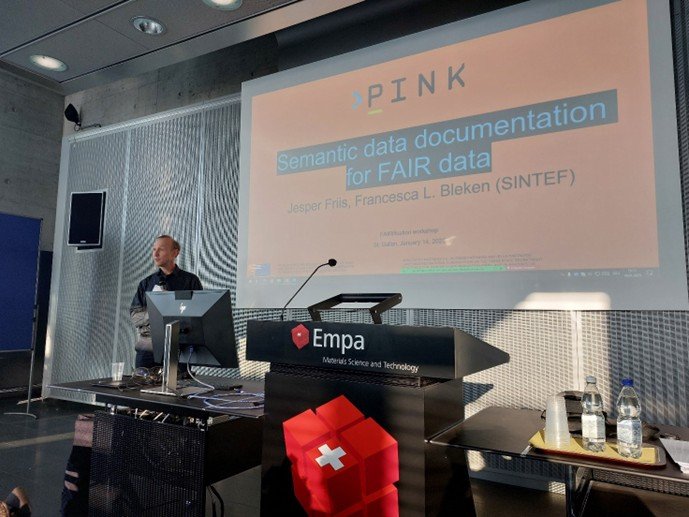
On January 14th in St. Gallen, Switzerland, INSIGHT met for a workshop withtwo Horizon Europe-funded projects at Empa SG. The focus of the workshop was to advance ongoing efforts in applying FAIR principles (Findable, Accessible, Interoperable, Reusable) to scientific data management. This meeting, focused on addressing key challenges in data curation, model validation, and regulatory usability, with the goal of improving transparency and fostering trust in scientific research. The three participants discussed the importance of better organize and allow the interoperability of metadata, standardize documentation, and find optimized ways to enhance the accessibility of data, particularly in biomedical and regulatory contexts.
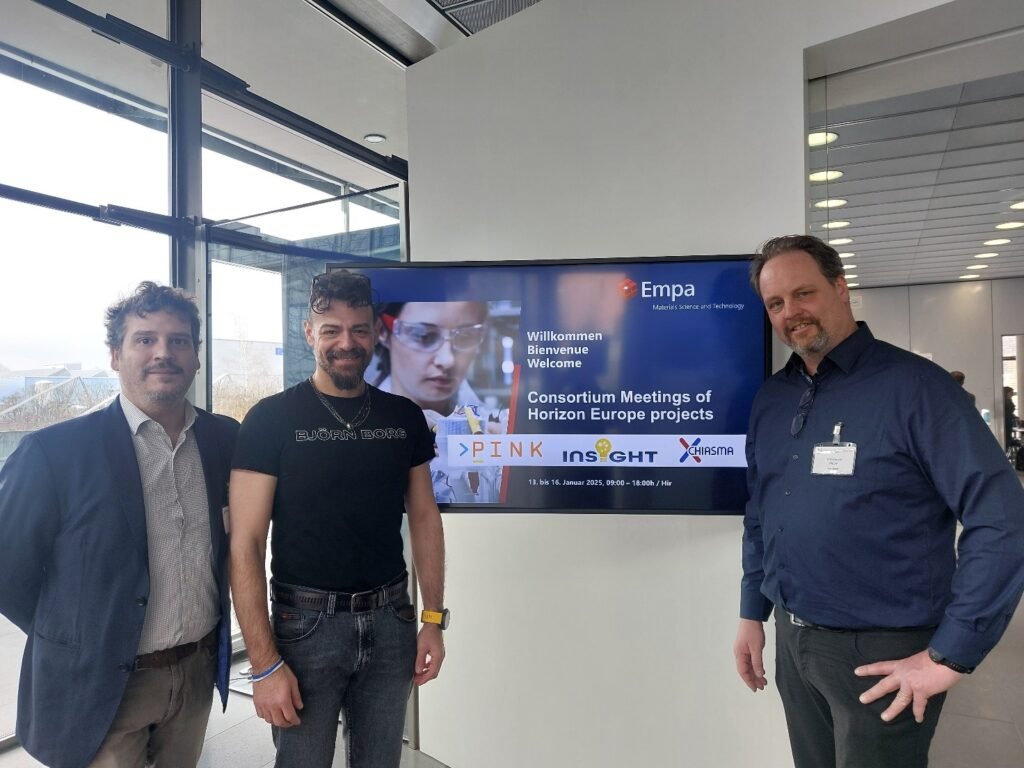
The INSIGHT Project is focused on creating standardized descriptions for in vitro models, while the CHIASMA Project is addressing the documentation and usability of more complex models. These efforts are complemented by the PINK Project, which is exploring ways to improve interoperability between in vitro and computational models. The collaboration among these initiatives highlights a coordinated effort to improve data usability and trustworthiness across disciplines and the necessity to find a universal system to use data and to apply in the scientific practice process.
The workshop also addressed experimental design and model transparency. Researchers were encouraged to design experiments with clear controls and methodically adjust variables to ensure reliable results. Discussions underscored the value of probabilistic approaches to measure uncertainties in model outputs, helping to build confidence in computational and in vitro models. These measures are seen as crucial for enabling regulators to adopt alternative testing methods with greater ease and confidence.
Participants were invited to provide feedback on the workshop and its outcomes through a questionnaire, accessible via a QR code. This feedback will play a vital role in shaping the next steps of the project, ensuring that the perspectives of researchers, regulators, and other stakeholders are incorporated into future strategies. By gathering these insights, the project teams aim to refine their approaches and maintain momentum in advancing and secure the use of FAIR principles, ensuring that scientific progress benefits both the research community and society.
Here you can find pictures from the workshop.